



Library
Research and Knowledge Products Library
Explore our growing body of research and advocacy materials highlighting pathways for
Asia’s financial sector to strengthen its sustainability policies and practices.
Asia’s financial sector to strengthen its sustainability policies and practices.

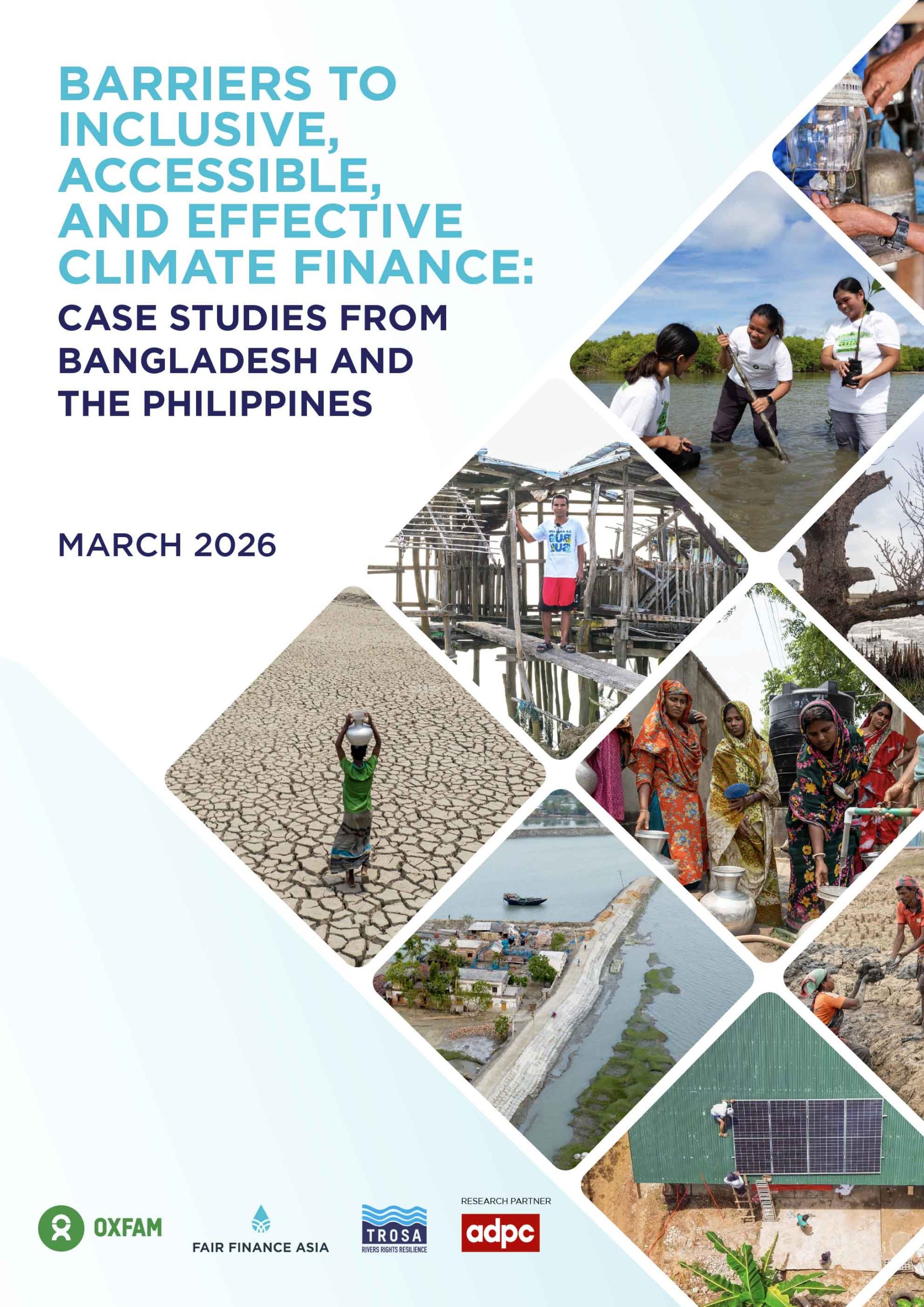
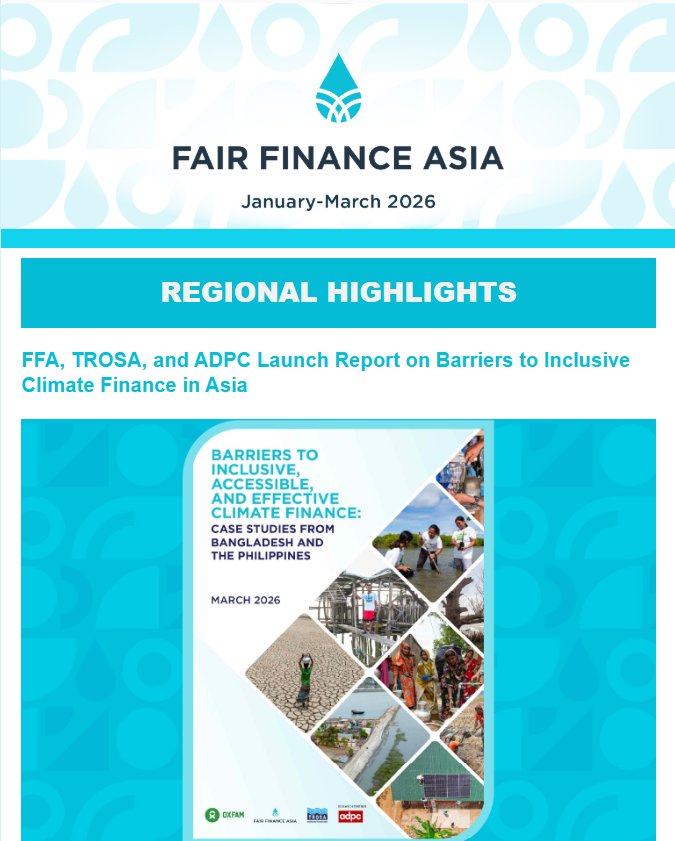
BARRIERS TO INCLUSIVE, ACCESSIBILE, AND EFFECTIVE CLIMATE FINANCE: CASE STUDIES FROM BANGLADESH AND THE PHILIPPINES


Oxfam’s Fair Finance Asia (FFA) and Transboundary Rivers of South Asia (TROSA) Programs, together with research partner, Asia Disaster Preparedness Center (ADPC), have launched a report exposing critical barriers that prevent climate finance from effectively reaching frontline communities in Bangladesh and the Philippines. The two countries are amongst the most climate-exposed nations in Asia and largest recipients of global climate funding. This report was developed in collaboration with Fair Finance Bangladesh, Fair Finance Philippines, Oxfam in Bangladesh, Oxfam Pilipinas, and Rangpur Dinajpur Rural Services Bangladesh (RDRS).
Share this article on:
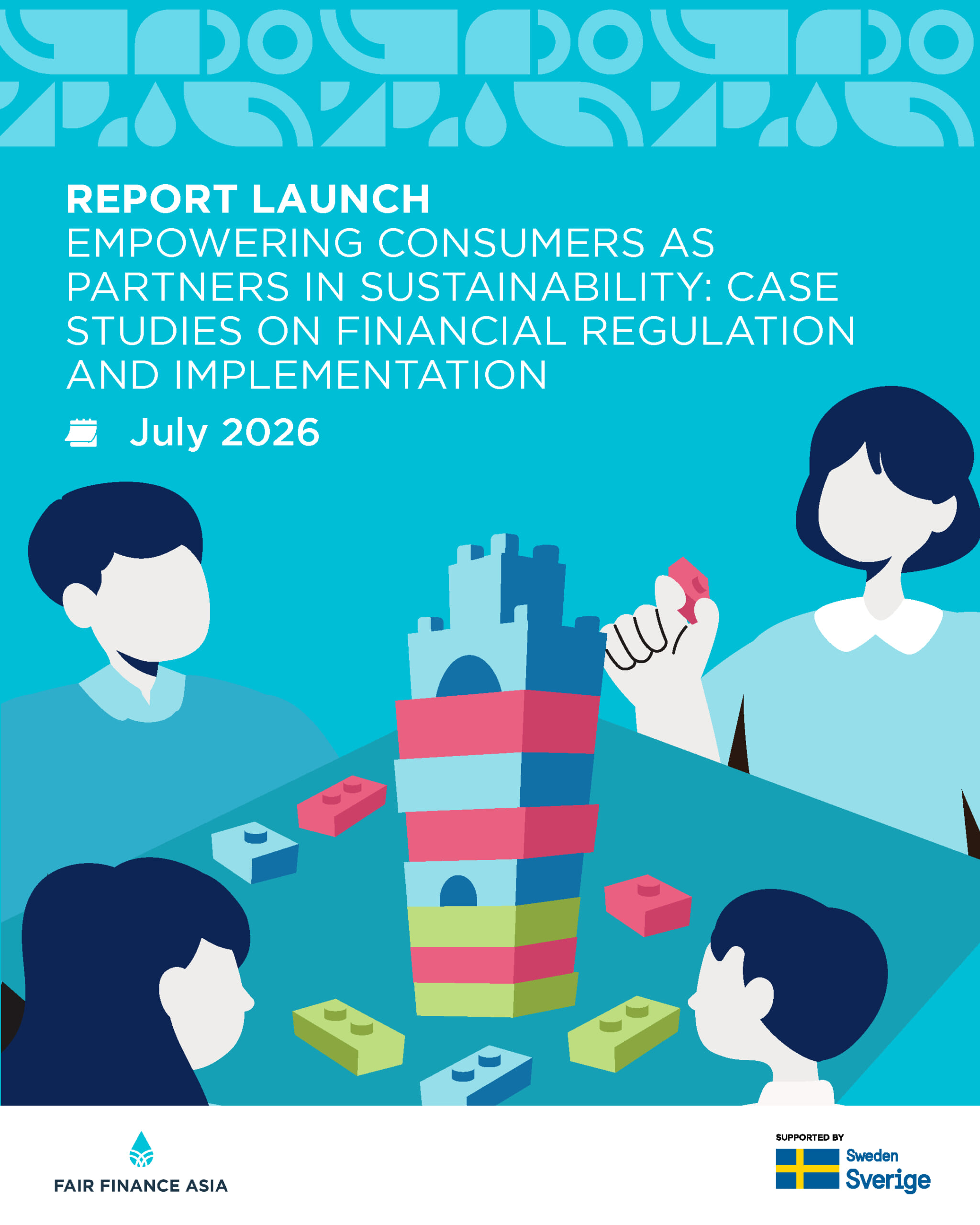
EMPOWERING CONSUMERS AS PARTNERS IN SUSTAINABILITY: CASE STUDIES ON FINANCIAL REGULATION AND IMPLEMENTATION
Fair Finance Asia (FFA) and research partner, Profundo, have launched a new report, Empowering Consumers as Partners in Sustainability: Case Studies on Financial Regulation and Implementation, on the experiences of banking consumers across Asia and examining how financial regulations are implemented in practice.
Share this article on:
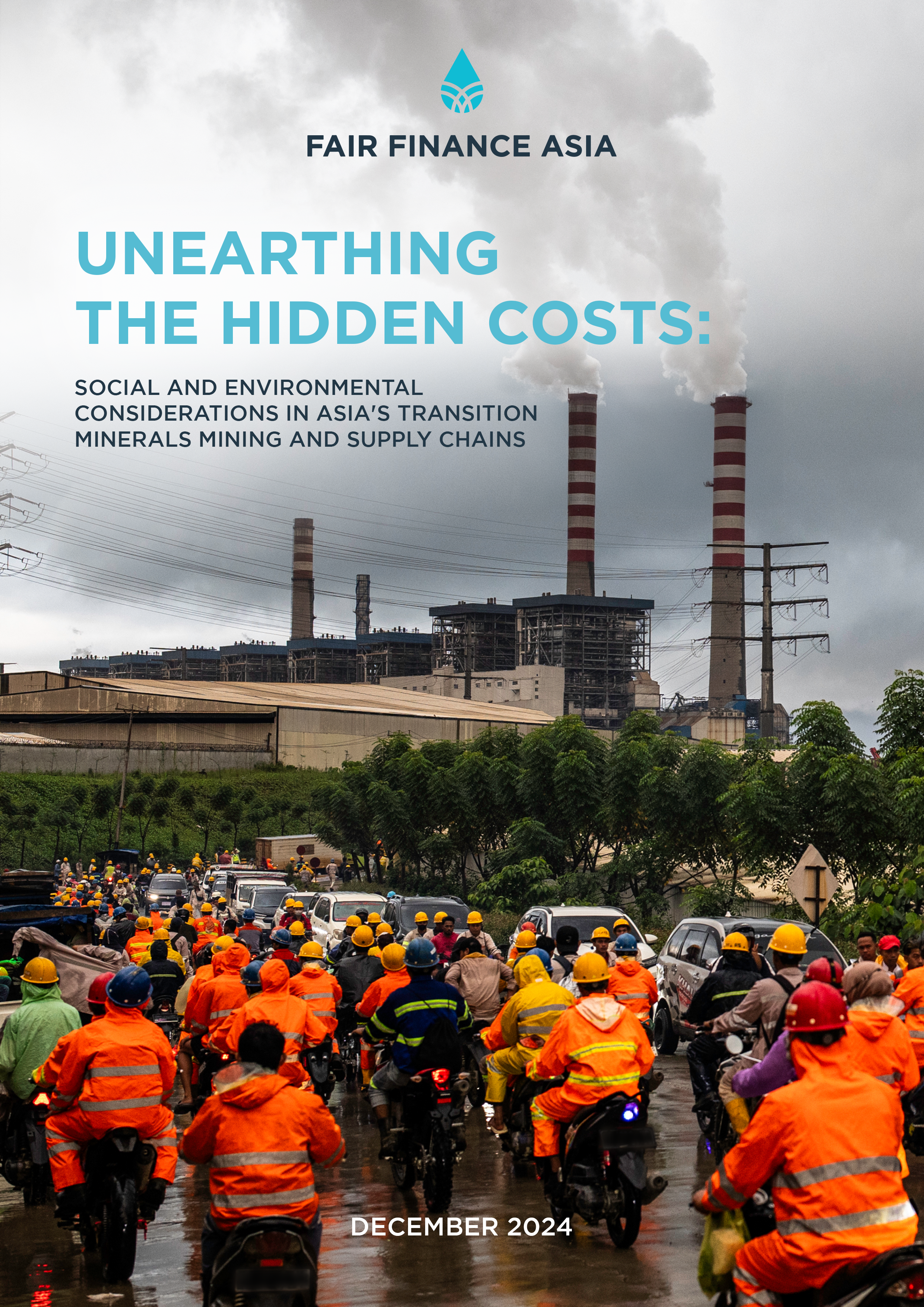
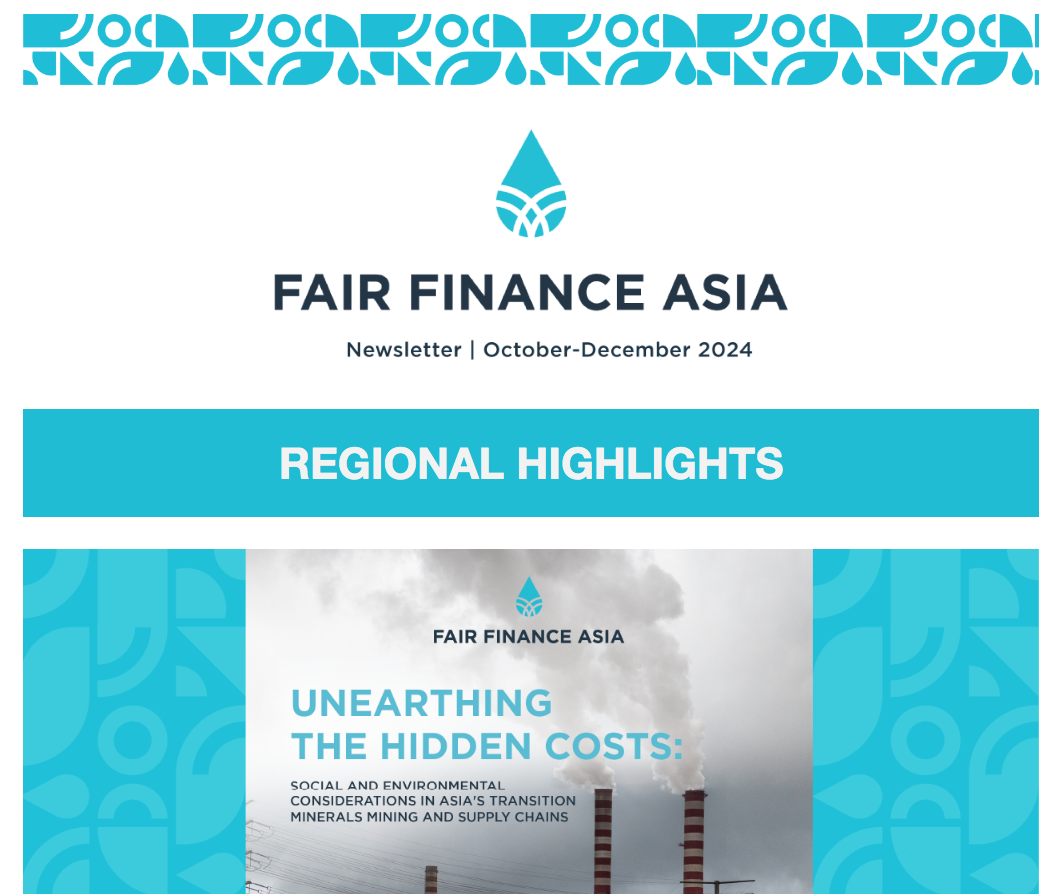
UNEARTHING THE HIDDEN COSTS: SOCIAL AND ENVIRONMENTAL CONSIDERATIONS IN ASIA'S TRANSITION MINERALS MINING AND SUPPLY CHAINS
On December 19, Fair Finance Asia (FFA) published a new report, Unearthing the hidden costs: Social and environmental considerations in Asia’s transition minerals mining and supply chains, which reveals that banks based in Japan and the Association of Southeast Asian Nations (ASEAN) are financing United States (US), European, and Asian downstream electric vehicle (EV) manufacturers who have indirect supply chain links to three nickel mining sites: PT Vale Sorowako and PT Weda Bay Nickel mines in Indonesia, and the Nickel Asia Corporation Rio Tuba mine in the Philippines. EV manufacturers may face varying levels of exposure based on their status (e.g., current indications or expected flows from Memorandums of Understanding or planned joint ventures) and the concreteness of these links. All three mines continue to face allegations from communities around them and civil society organizations (CSOs) of serious human and environmental rights violations.
Share this article on:
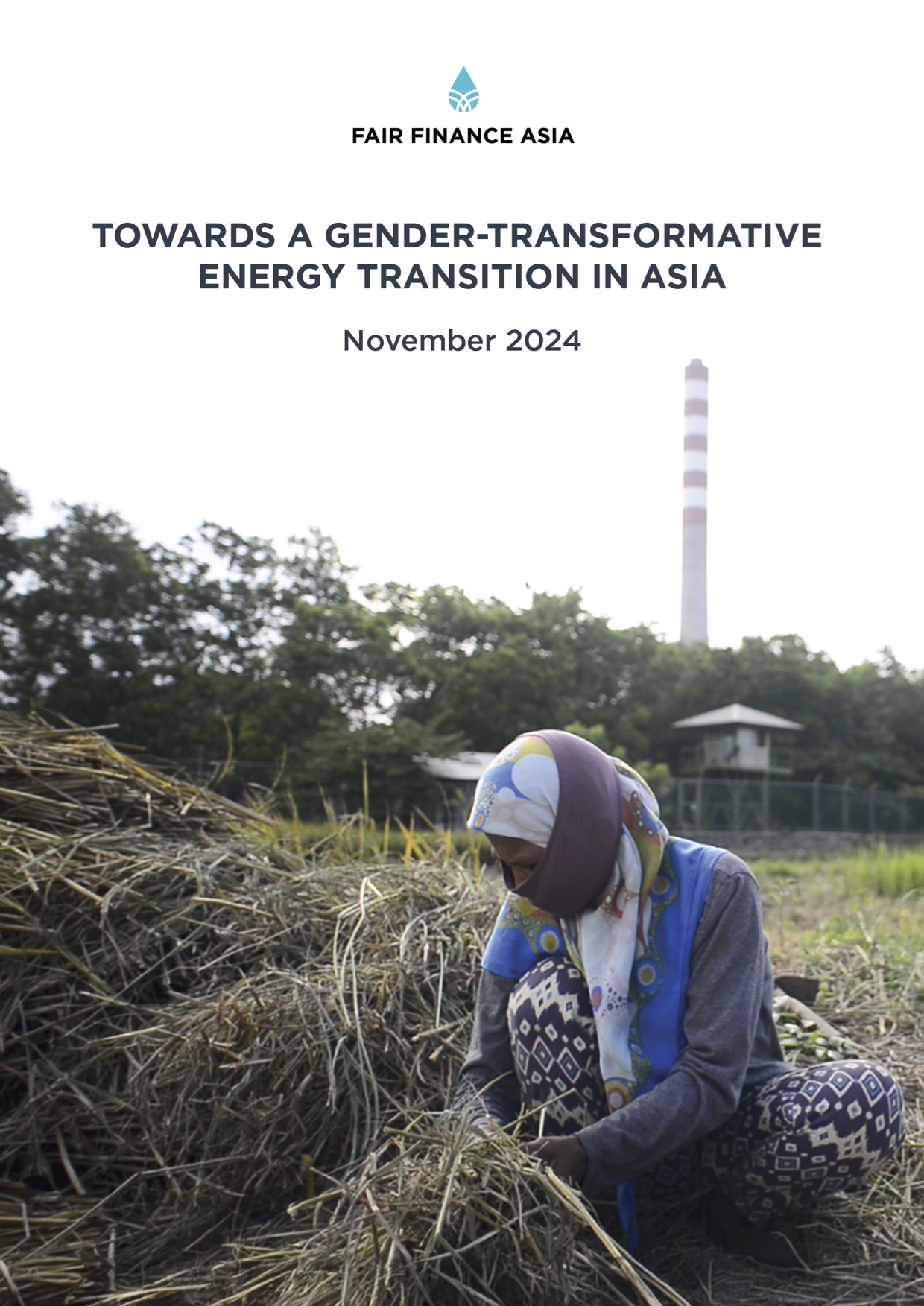
TOWARDS A GENDER-TRANSFORMATIVE ENERGY TRANSITION IN ASIA
Launched on November 27, 2024, Fair Finance Asia's (FFA) new report, Towards a Gender-Transformative Energy Transition in Asia, reveals critical gaps in the consideration of gender equality and women’s empowerment in the early retirement of Cirebon 1 coal-fired power plant (CFPP) in Indonesia. The early retirement of Cirebon 1 is the first transaction under the Asian Development Bank’s Energy Transition Mechanism (ADB ETM).
Share this article on:
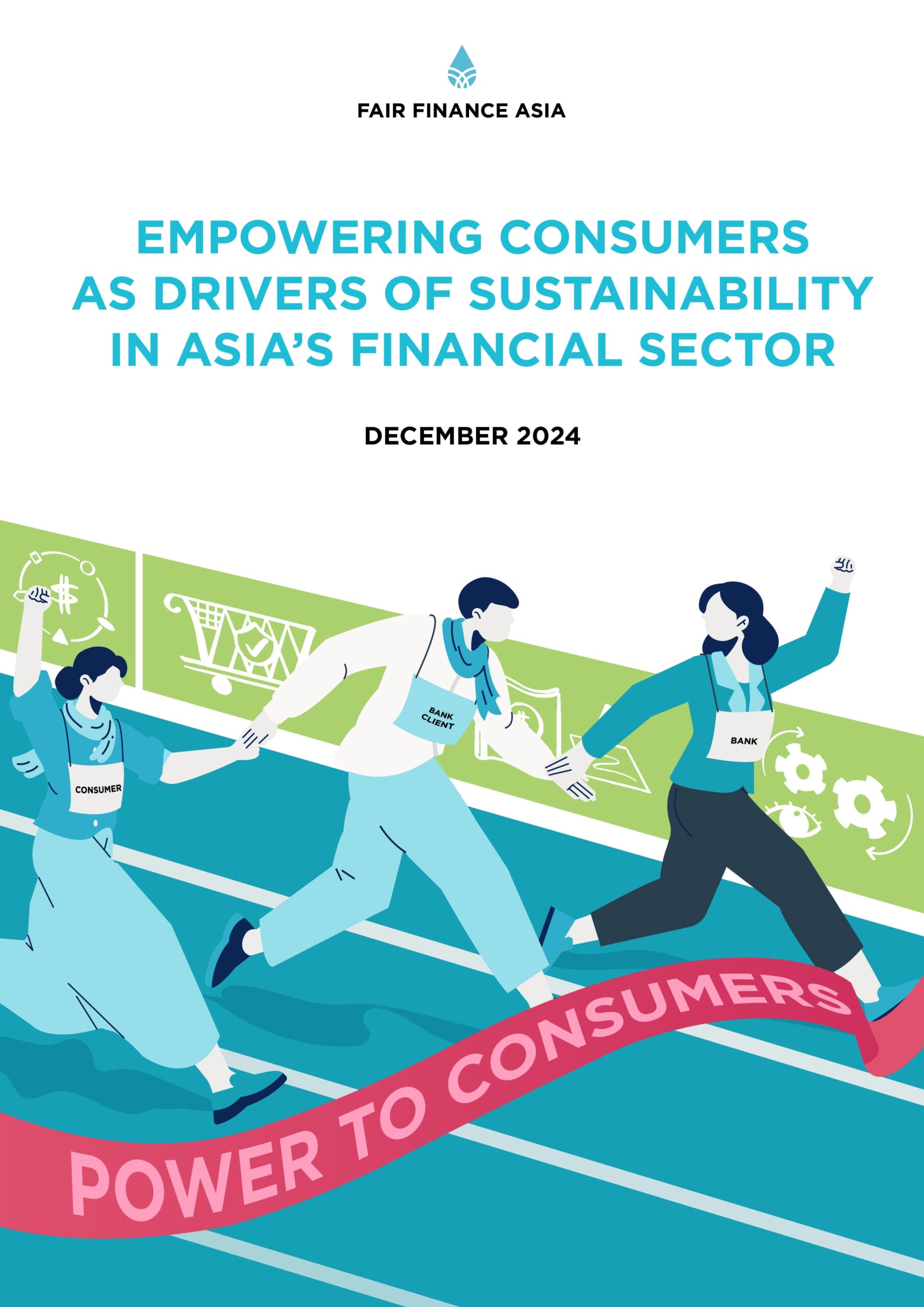
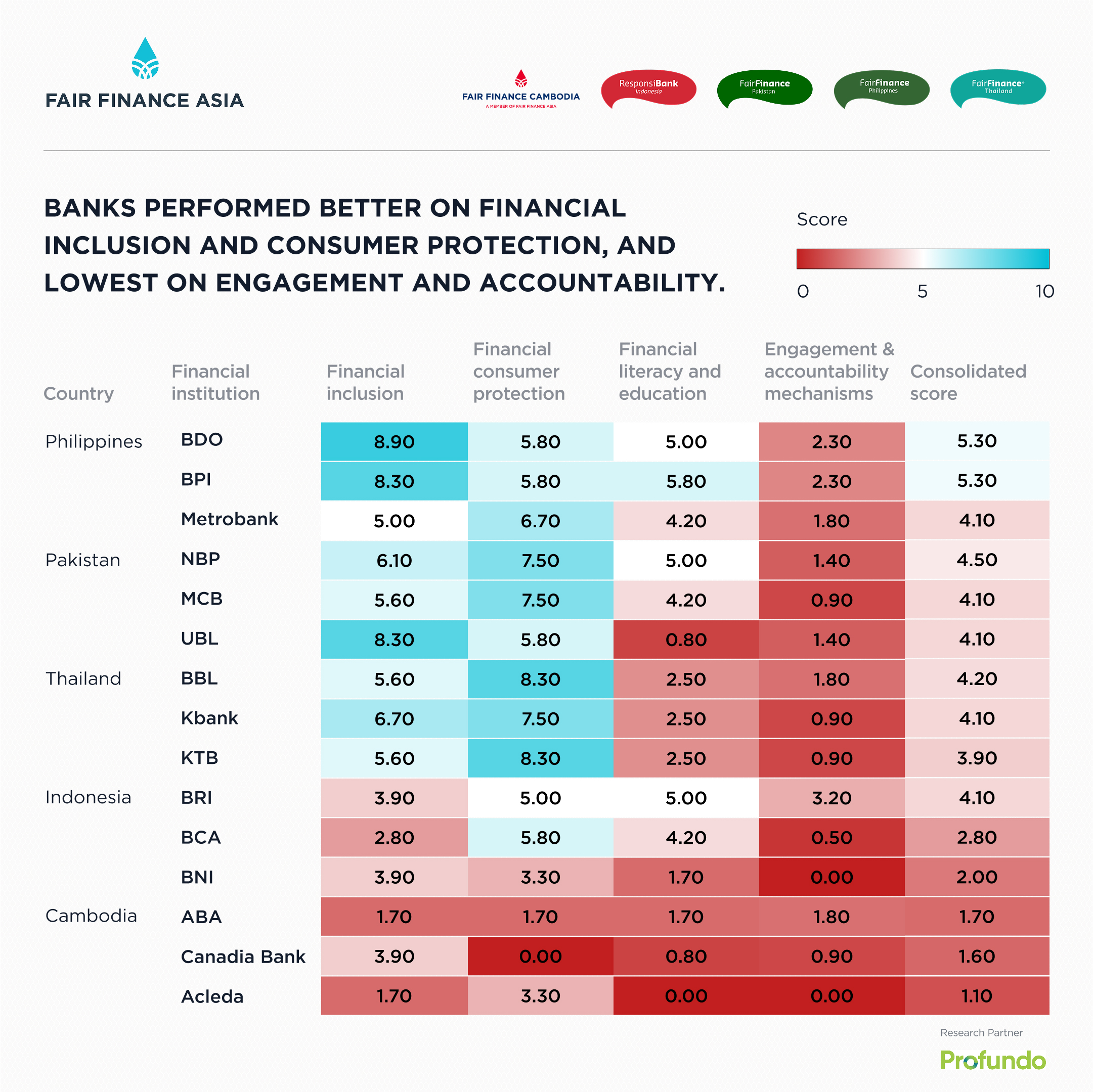
EMPOWERING CONSUMERS AS DRIVERS OF SUSTAINABILITY IN ASIA'S FINANCIAL SECTOR
On December 4, 2024, International Day of Banks, Fair Finance Asia (FFA) published a new scorecard assessing the extent to which Asian banks enable consumers to actively contribute to positive sustainability outcomes.
Share this article on:
What's New
Latest Events and Media
Highlight
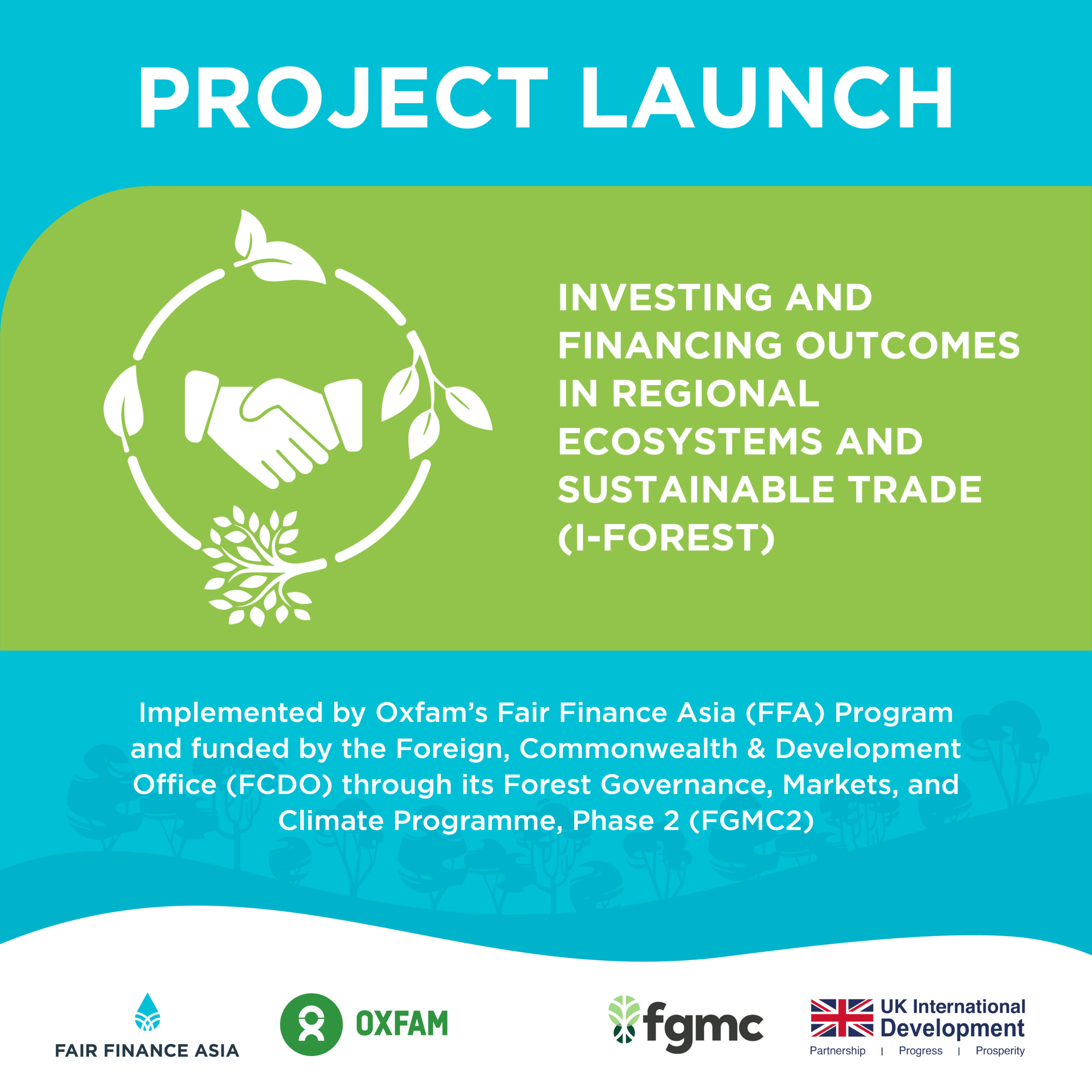
Agriculture and Forest Commodities
23/04/2026
Lastest
Highlight
Lastest

Highlight
Highlight
Lastest

Country Partners
A Growing Network of Civil Society
Coalitions and Partners
Coalitions and Partners










About
Fair Finance Asia
Fair Finance Asia (FFA) is a regional network of Asian civil society organizations (CSOs) committed to ensuring that financial institutions’ funding decisions in the region respect the social and environmental well-being of local communities.
Explore FFA


Regionally
We monitor financial flows between countries.

Nationally
Our coalitions assess investment policies.

Collaboratively
We promote stronger coordination on sustainable finance policy.

Don’t miss the latest updates from the FFA network!