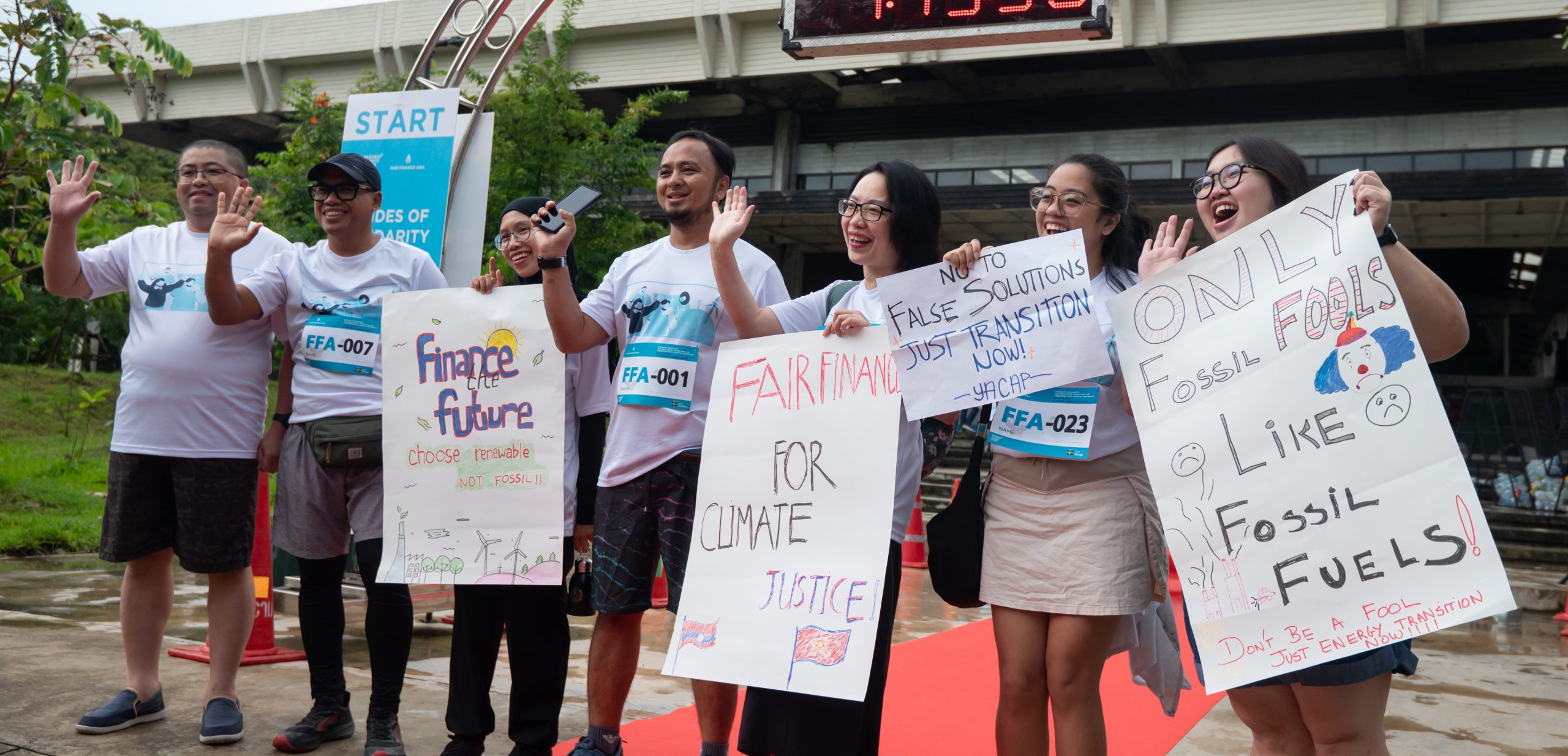
Fair Finance Asia (FFA) is a network of over 90 civil society organizations (CSOs) in Asia working together to ensure that financial institutions operating in the region uphold social and environmental rights and the well-being of local communities.

FFA operates at the regional level and across ten countries in Asia in Bangladesh, Cambodia, India, Indonesia, Japan, Lao PDR, Pakistan, Philippines, Thailand, and Vietnam.

FFA is part of Fair Finance International (FFI), a global network of civil society coalitions advocating for sustainable finance across Europe, Latin America, and Africa, and Asia.

Goals

Transformed policies and practices by financial institutions operating in Asia
Smart sustainable finance regulation and legislation developed and implemented
Building strong and wider alliances
Strengthening the capacity of civil society organizations
Elevate voices from the ground and increase awareness on key issues

Our Impact

264
New or improved financial policies at the national and regional level.
68
Improvements by national governments in national regulations and/or their enforcement and other financial sector regulators, promoting the integration of ESG and human rights criteria.
600
CSOs supported by regional partners and/or national coalitions that increasingly participate in or initiate influencing and advocacy efforts on promotion of a transparent and accountable financial sector.
115,959
People taking action campaigning, demanding and/or engaging for a transparent and accountable financial sector that integrates ESG and HR criteria.
Key Stakeholders

Influencing Targets

Financial institutions
Financial sector national and regional actors
Financial sector regulators
Civil society organizations
Intermediary stakeholders (e.g.media and public)

How we work

Regionally

FFA monitors the cross-border financial flows between countries as well as the impacts of these investments. FFA represents the collective voice of its national coalitions at regional and international dialogues on sustainable finance.

Nationally

Our coalitions assess and monitor the lending and investment policies and practices of financial institutions as well as lead national financial sector advocacy for sustainable finance

Collaboratively

FFA calls for a stronger cross-border sustainable finance policy coordination in Asia that is consultative, inclusive and multi-stakeholder which includes CSOs that represent the voices of communities.

Our network

FFA as part of Fair Finance International

The FFA program is a part of the Fair Finance International (FFI), which operates in 14 other countries globally namely Belgium, Bolivia, Brazil, Colombia, Germany, Ghana, Netherlands, Norway, Nigeria, Peru, Southern Africa (South Africa and Mozambique), Sweden and Uganda apart from the ten FFA countries. FFI’s assessment reports on the policy and practices of national financial institutions form part of FFA’s influencing and engagement toolkit in promoting sustainable finance and responsible investments. Through our cross-collaboration we support sustainable financing initiatives and knowledge sharing, and strengthen the evidence base in cases of harmful investments to better hold financial institutions to account. By connecting these diverse national, regional and global perspectives the Fair Finance network as a whole can advise on and advocate for meaningful changes to financing systems, with positive results for citizens and communities.

Context

In Asia, banks play a significant role in the economy, funding many projects, sectors, governments, and micro, small and large companies. Their funding and decision making, therefore, greatly impact what is being funded and how that funding affects not just economic recovery and growth, but also climate change, environmental degradation, respect for human rights, social well-being and even political stability.

Over the last decades, there have been many reforms in favor of a market-based financial sector with regulatory requirements to safeguard their stability. However, Asian banks have generally had no binding obligations to prevent negative consequences for workers, communities, customers and citizens as well as environmental degradation and climate change.

With COVID-19 triggering unprecedented economic and societal crises in 2020, whatever hard won progress gained has been set back, and inequality, social unrest, and environmental degradation in the region continue to rise.

Not only will this situation increasingly burden governments’ budgets in Asia, the economic downturn is also foreseen to challenge banks’ existing loan portfolios, with prolonged consequences.